भारतीय भेषज संहिता आयोग

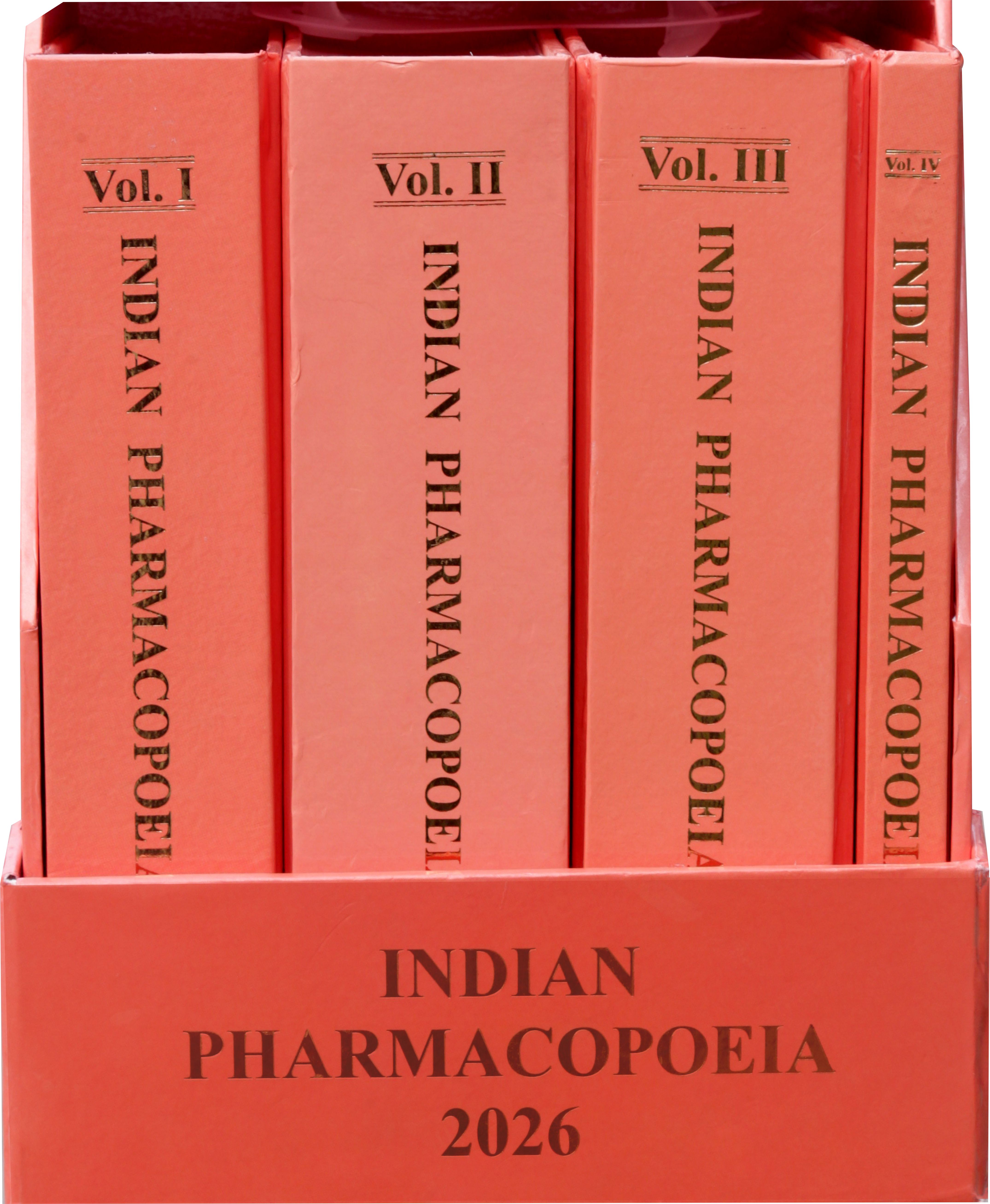
As per provisions of the Second Schedule of the Drugs and Cosmetics Act 1940, Indian Pharmacopoeia (IP) is the official book of standards for drugs in India. IP standards are authoritative in nature and are legally enforceable in India. The IP is published by the Indian Pharmacopoeia Commission (IPC) on behalf of the Ministry of Health & Family Welfare, Government of India.

The IPC is an autonomous institution under the Ministry of Health & Family Welfare, Government of India that is solely responsible for setting and publishing official drug standards in the IP. IPC does not have any role in the regulatory review and approval of drugs in India. As per provisions of the Drugs and Cosmetics Act 1940, Central Drugs Standards Control Organization (CDSCO) and State Licensing Authorities (SLAs) are competent to take regulatory decisions.
Users can purchase copy of the IP directly from the IPC and details in this regard are available on the IPC website www.ipc.gov.in.
IP Online is the digital version of the IP that provides user friendly access to the IP monographs and associated IP Reference Substances along with advanced search functions. Users may visit www.iponline.ipc.gov.in to subscribe the IP Online.
The IPC issues various types of publications to maintain and update the drug standards in the country. These include, but not limited to, the following:
o Edition of the IP: A comprehensive publication issued periodically by the IPC, incorporating all monographs, general chapters, and other standards approved for that cycle. It becomes official from the effective date mentioned in the printed book.
o Addendum to the IP: A supplement that is issued to add new monographs, general chapters or their revisions in the current edition of the IP. Addendum to the IP also becomes official from the effective date mentioned in the printed book.
o Amendment List: These are issued by the IPC on its website, as and when required, to add minor corrections and/or revisions in the IP text that warrant immediate implementation. Content of the amendment list is official in nature and takes effect immediately, unless otherwise stated therein.
o Notices and Updates: These are communications issued by the IPC from time-to-time to provide clarifications about IP standards and their compliance, or information about proposed standards to be included in the IP. Notices and updates are informative in nature and are usually not considered official text, unless explicitly stated.
o Corrigenda: Published to make corrections, if any, required in already issued amendment list, notices or updates.
Interested stakeholders can collaborate with the IPC and participate in the standards setting process in following ways:
o Sponsoring New Monograph Development: Stakeholders, including the pharma manufacturers, are encouraged to share new monograph proposals to lab.ipc@gov.in for considering their inclusion in the IP. Check list of the desired documents for monograph development is available on www.ipc.gov.in.
o Proposals for Monograph Revisions and Upgradations: Stakeholders may also contribute in monograph modernization by sending monograph revision proposals to lab.ipc@gov.in along with the justification and supporting data.
o Donation of Candidate Material for Establishment of IP Reference Substances: IPC
encourages collaboration with stakeholders for establishing the IP Reference Substances by way of donating the candidate material. Please reach out to IPC at lab.ipc@gov.in for further details.
IPC has published a guidance document ‘IPC/GD/02─Process for Development of Indian Pharmacopoeia Monographs’ wherein the process for monograph development is elaborated. Please visit IPC website www.ipc.gov.in to view the guidance document.
IPC does not restrict an early adoption of the monograph specifications, and manufacturers may adopt published IP monograph(s) for an early implementation, before the effective date. This may be done in consultation with the competent regulatory authority and IPC does not grant any approval for an early implementation of the IP monograph(s), which remains a regulatory function.
As per the Section 16 of the Drugs and Cosmetics Act, 1940, read with the Rule 124 of the Drugs Rules, 1945, and the Second Schedule, any drug included in the IP shall comply with the standards of identity, purity and strength as prescribed in the current edition of the IP. Accordingly, once a monograph is published in the IP, it becomes official from the effective date mentioned therein, and all marketed drug products in India shall comply with the IP specifications after the effective date.
Alternative analytical methods or reagents, other than those published in the IP, may be applied by the manufacturers for in-house control purposes provided the same are proven to give results of equivalent accuracy. Such alternative methods or reagents must be validated and are subject to approval by the competent regulatory authority. However, in the event of doubt or dispute, the official IP method shall be alone authoritative and results obtained by the IP method shall be considered as conclusive. Moreover, IPC does not have any role to approve alternative methods or reagents. For further details, please refer to the ‘Alternative Methods’ in the General Notices of the IP and IPC’s Notice dated February 26, 2021.
Please refer to IPC’s Update dated February 4, 2022 on this subject (available on www.ipc.gov.in) which is self-explanatory.
Solubility specifications mentioned in the IP are intended as information on the approximate solubility at a temperature between 15o and 30o, unless otherwise stated, and are not to be considered as official IP requirements. Please refer to the ‘Solubility’ in the General Notices of the IP.
The statements under the description are for preliminary evaluation and shall not to be interpreted in a strict sense and are not to be regarded as official requirements. Please refer to the ‘Description’ in the General Notices of the IP.
The statements mentioned under the storage constitute non-mandatory advice and serve as guidance for maintaining the quality of the drug substance or drug product. Please refer to the ‘Storage’ in the General Notices of the IP.
The usual strengths mentioned in the individual IP monographs indicate the strength(s) of the drug products that are usually marketed in India. These are suggestive in nature and do not restrict the stakeholders to manufacture other strengths which are not mentioned in the IP. Such strengths shall be approved by the competent regulatory authority. Drug products with usual strengths, other than those mentioned in the IP, shall also comply with the requirements of IP standards.
The RRTs are given in the IP monograph for information purpose only, to aid in peak identification. There are no acceptance criteria applied to variation in RRTs.
In cases where correction factors are mentioned in the IP monographs, the same should be applied by direct multiplication with area of the corresponding peak. In cases where RRFs are mentioned, the peak area should be divided by the RRFs.
Changes in chromatographic conditions can be made in accordance with the guidance provided under ‘Adjustment to Chromatographic Conditions’ of the IP general chapters on Gas Chromatography {2.4.13} and Liquid Chromatography {2.4.14}. As long as changes made are within the permissible limits, further validation of the method is not required. However, any change made outside the permissible limits, would warrant revalidation of the method.
In cases where the make of the HPLC column is not mentioned in the IP monographs, users can write to lab.ipc@gov.in and get desired information.
In order to clarify impurity limits in the IP monographs and general chapter {5.5}, IPC has issued a Notice No. T.11015/01/2023-AR&D dated May 30, 2025 (available on www.ipc.gov.in) which is self-explanatory.
IPRS are issued by the IPC or laboratories authorized by the IPC. Once referred in the IP monograph, IPRS becomes part of the official standard and assumes status of the official reference standard that is alone authoritative in case of doubt or dispute to establish quality of drug in compliance with the IP.
IPRS and impurity standards can be directly purchased from the IPC or laboratories authorized by the IPC. One can find the list of available IPRS and impurity standards at www.onlinestore.ipc.gov.in and can place their orders. The IPC has not authorized any vendors/distributors for the sale and distribution of IP standards. In addition, IPC has authorized Central Drugs Laboratory, Kasauli 173204, Himachal Pradesh (www.cdlkasauli.gov.in) for supplying reference standards of human vaccines and immunosera. Similarly, IPC has also authorized Microbial Type Culture Collection (MTCC) at CSIR-Institute of Microbial Technology (IMTech), Sector 39A, Chandigarh 160036 (www.imtech.res.in) for supplying reference microbial cultures.
The current lot of the IPRS or impurity standard is valid till the lot is present in the list of IPRS and impurity standards available at www.onlinestore.ipc.gov.in.
The IPC does not provide guidance on the use of non-IP reference materials in place of an IP standard. Users are advised to consult with the competent regulatory authority for guidance on the use of a non-IP reference material.
IPC has published a guidance document ‘IPC/GD/09─IP Reference Substances’ wherein the procedure for preparation of working standards is elaborated. Please visit IPC website www.ipc.gov.in to view the guidance document.
The purity of IPRS is assigned on ‘as-is’ basis which indicates that there is no need to dry or desiccateThe purity of IPRS is assigned on ‘as-is’ basis which indicates that there is no need to dry or desiccatethe IPRS before use.
The certificates or MSDS of the IPRS or impurity standards can be downloaded from www.onlinestore.ipc.gov.in.
IPRS are intended for use in tests and assay, as specified in the official IP monographs. They are not intended for use in humans or animals as drugs, medical devices, or for diagnostic purposes.
If any IPRS or impurity standard is not listed in the IPC catalogue, other equivalent pharmacopoeial reference standard may be used after establishing its suitability for intended purpose. For further details, please refer to the IP general chapter on Reference Substances {5.9}.
In case of Biotechnology Derived Therapeutic Products, if IPRS are not available, any other equivalent pharmacopoeial standards or International Standards may be used after establishing their suitability for intended purpose. However, if no such reference standards are available, an internal reference standard may be established as per the CDSCO guidelines “Current Guidelines on Similar Biologics: Regulatory Requirements for Marketing Authorization in India”. This may be done in consultation with the competent regulatory authority and IPC does not have any role in this regulatory function.
IPRS are primarily intended for the procedures mentioned in the IP monographs. However, if needed, IPRS may be used in non-pharmacopoeial methods also. It shall be the responsibility of the user to establish suitability of the IPRS intended for non-pharmacopoeial methods.
The HSN code of IPRS is 29242990.
News & Highlights
- Applications open: PvPI Internship Programme 2026

- Public Auction for Disposal of Newspaper/Annual Report/Bill Book, Iron Scrap, Aluminium Scrap, E-Waste (Tonner/Cartridge), Plastic, Knaster (Tin) have organized “As is, where is, basis” at IPC, Ghaziabad
- Public Auction for the Old and Obsolete items have organized “As is, where is, basis” at IPC, Ghaziabad
- Guidance Document for hospitals in India for safety monitoring and reporting of Medical Devices Adverse Events(MDAE): Materiovigilance Programme of India (Version 1.3)
- Application are invited for Training Programme on Pharmacovigilance for NABH Accredited Hospitals at Sher-i-Kashmir Institute of Medical Sciences, Soura, Srinagar, J&K on 23rd October 2026
- Corrigendum for the Walk-in Interview of Pharmacopoeial Associate Grade-1 on 30.09.2026
- Walk-in Interview is going to be held on 30th september 2026 for filling up of the vacant post of Pharmacopoeial Associate Grade 1 in Indian Pharmacopoeia Commission(IPC)
- 6th NATIONAL PHARMACOVIGILANCE WEEK 2026 VALEDICTORY CEREMONY
- THE HON’BLE MINISTER OF STATE FOR HEALTH & FAMILY WELFARE AND CHEMICALS & FERTILIZERS, GOVERNMENT OF INDIA, SMT. ANUPRIYA PATEL RELEASES THE ADR-PvPI 2.0 MOBILE APP (iOS VERSION) AND GUIDANCE DOCUMENT
- Second Webinar of "Webinar Series on Gene Therapy Products and Cell-based Therapy Products" to be held on 06th October 2026
- HON’BLE MINISTER OF STATE FOR HEALTH & FAMILY WELFARE AND CHEMICALS & FERTILIZERS, GOVERNMENT OF INDIA, SMT. ANUPRIYA PATEL RELEASES THE 7TH EDITION OF NATIONAL FORMULARY OF INDIA (NFI 2026).
- Applications Open: Microbiology Division Internship Programme
- 6th National Pharmacovigilance Week 2026 Inaugural Ceremony
- Call for Sponsors for IPC’s 1st Annual Pharmacopoeial Meet & Stakeholders’ Contribution Awards
- Walk-in Interview is going to be held on 30th september 2026 for filling up of the vacant post of Pharmacopoeial Associate Grade 1 in Indian Pharmacopoeia Commission(IPC)
- 1st Annual Pharmacopoeial Meet & Stakeholder's Contribution Awards
- Walk-in Interview is going to be held on 15th september 2026 for filling up of the vacant post of IT Associate in Indian Pharmacopoeia Commission(IPC)
- Applications are invited for the contractual position of Plumber at the Indian Pharmacopoeia Commission (IPC)
- Applications Open: MvPI Internship Programme 2026
- ADRMS Made Easy: A Step-by-Step Guide to Medical Device Adverse Event Reporting under Materiovigilance Programme of India
- Scientific Conclave and Interactive Session on Indian Pharmacopoeia (IP) 2026: Advancing Quality, Safety, and Innovation in Drugs, Food and Phytopharmaceuticals
- Draft revision contains IP monographs/General chapters for comments
- Registrations are open for the 6th National Pharmacovigilance Week Campaign on 21st September, 2026 at BHIM Hall, Dr. Ambedkar International Centre, New Delhi
- Applications are invited for In-Person Brainstorming Session on "AI-Powered Pharmacopoeia Standards Development & Pharmacovigilance Practices.”
- Scientific Conclave & Interactive Session on Indian Pharmacopoeia 2026
- Corrigendum related to GeM tender notice: Digitalization of the National Formulary of India (NFI)
- Expression of Interest (EoI) for Verification/Testing of Indian Pharmacopoeia (IP) Monographs
- Result of the selection process for the post of Senior Scientific Officer, IPC
- National Conference on Quality and Safety of Biosimilars: Strengthening India's Biopharma SHAKTI Vision to be held on 10-11th September 2026 at Bengaluru
- National Conference on Quality and Safety of Biosimilars: Strengthening India's Biopharma SHAKTI Vision to be held on 10-11th September 2026 at Bengaluru
View All